


DELIVERY INFO
We are proud to offer free delivery on many products within our service area of the Kootenay-Boundary region of British Columbia. Seeds are a $5 flat rate delivery charge.
NOTE:Tree & Plant orders placed in the winter months are delivered in May or available to pick up on or after April 30th during open hours. Seed orders ship within 1 to 2 weeks from the date the order is finalized or you can select your preferred date. Please reach out to us if you have any questions. Processing times may vary based on product availability.
Product Details
| Botanical Name | Amelanchier laevis |
| Mature Height | 15 - 25 Feet |
| Mature Width | 15 - 25 Feet |
| Light Requirement | Full Sun to Full Shade |
| Hardiness Zone | Zones 4 - 8 |
| Tolerance | N/A |
| Attracts | Birds, Pollinators |

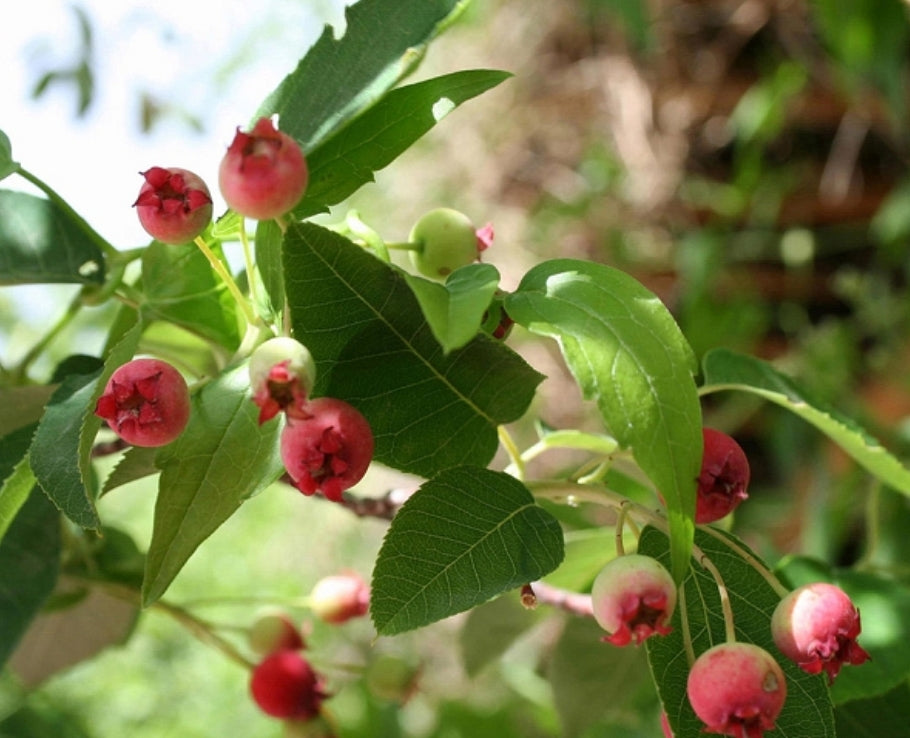
ℹ The Allegheny Serviceberry (Amelanchier laevis) is a highly valued tree with numerous positive attributes, making it a popular choice for landscaping and ecological purposes. It features beautiful, multi-seasonal appeal with white flowers in early spring, edible berries in summer, and stunning fall foliage in shades of orange, red, and gold. The berries are not only edible for humans but also attract birds and wildlife, while the flowers support pollinators like bees and butterflies. This low-maintenance tree requires minimal pruning, is adaptable to various soil conditions, and thrives in full sun to partial shade. Its root system aids in erosion control, making it ideal for slopes and areas prone to soil movement. Additionally, it tolerates urban pollution and can flourish in city environments. The Allegheny Serviceberry's manageable size and attractive form suit various landscaping settings, including as a specimen tree, in mixed borders, or in naturalized plantings. Offering visual interest year-round, from its early blooms and berries to its fall foliage and winter bark, it is a native North American species well adapted to local climates and ecosystems, promoting biodiversity and supporting native wildlife. Planting this tree reduces the need for irrigation and chemical inputs, supports local wildlife, and contributes to overall ecosystem health.